 Andromède V
Commune
Rareté : Commune
La rareté la plus courante : la plupart des articles de Wikipédia deviennent des Communes.
La rareté suit la notoriété de l’article : ses lectures sur Wikipédia en français et en anglais sur un an, et le nombre de langues dans lesquelles il existe.
Ce qu’il faut savoir
- Classe
- Lieu
- Domaine
- Sciences et techniques
- Dans les collections
- Personne ne l’a encore tirée.
Ce qu’en dit Wikipédia
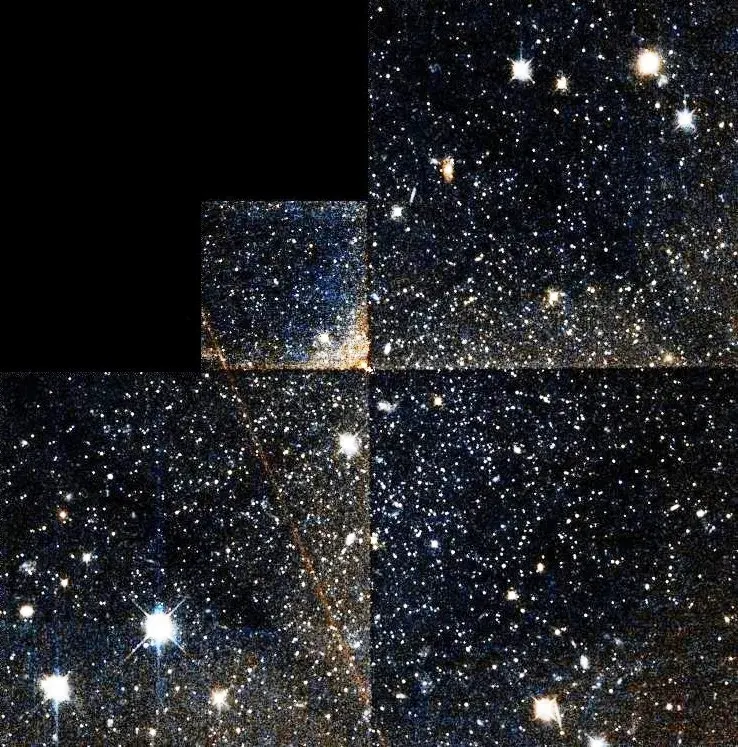
Andromeda V est une galaxie naine sphéroïdale qui fait partie de notre groupe local. Elle est découverte par T. E. Armandroff, J. E. Davies et G. H. Jacoby en 1998. Son nom fait pendant aux galaxies Andromeda I, II, III et IV, découvertes dans la même région de l’espace vingt-cinq ans auparavant.
Extrait de l’article « Andromède V » de Wikipédia, sous licence CC BY-SA 4.0. Lire l’article sur Wikipédia
Image : Hubble Space Telescope - Hubble Legacy Archive Permission details ACKNOWLEDGMENT FOR PUBLICATIONS All refereed publications based on data obtained from the HLA are requested to carry the following footnote: Based on observations made with the NASA/ESA Hubble Space Telescope, and obtained from the Hubble Legacy Archive, which is a collaboration between the Space Telescope Science Institute (STScI/NASA), the Space Telescope European Coordinating Facility (ST-ECF/ESA) and the Canadian Astronomy Data Centre (CADC/NRC/CSA). In addition, publications of research supported by an STScI grant must carry the following acknowledgment: Support for Program number ____________ was provided by NASA through a grant from the Space Telescope Science Institute, which is operated by the Association of Universities for Research in Astronomy, Incorporated, under NASA contract NAS5-26555., Public domain, via Wikimedia Commons.
Ouvre des boosters gratuits et ajoute Andromède V à ta collection.
Jouer gratuitement